
Reader response and some news you can use
Myron Yaster MD

From Myron:
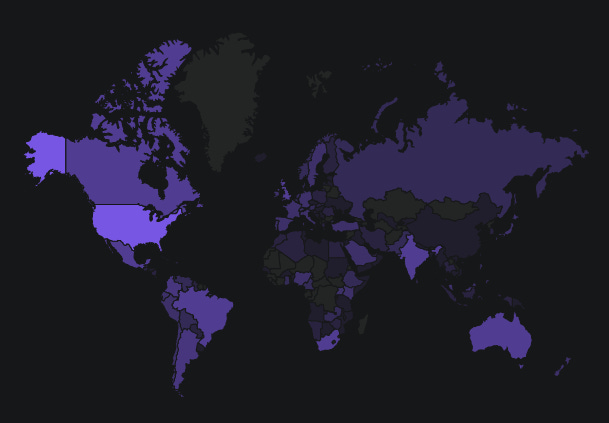
The PAAD is hosted and distributed by Substack which provides me and the PAAD’s executive council with some basic reader analytics. We currently have 9,147 subscribers and each PAAD has a 60-70% open rate. We know that 60% of our readers are in the U.S. and with the exception of China, where for reasons that are unclear to me it is not allowed, the PAAD has a worldwide readership.
In the next month we will be distributing a survey to find out more about you to help us improve the PAAD….so keep a look out for it and please fill it out when you receive it. The responses will be de-identified.
Finally, I know that the PAAD is very U.S. centric and I am constantly on the look-out for articles that may be of interest to our non-American readers. I’d like to publicly thank Dr. Francis Veyckemans who identifies many articles from European anesthesia journals and is a key reviewer for the PAAD!
From Amr Abouleish, MD, MBA, FASA, University of Texas Medical Branch
One of your best PAADs Cognition and Anesthesia Exposure in Adolescent and Young Adult Retinoblastoma Survivors here and having commentary from Drs. Gleich and Flick was especially impactful.
I continue to be frustrated by the FDA black box warning regarding volatile anesthetics, particularly because it appears in every anesthesia consent form I am required to use in Texas. In Texas, the Texas Medical Disclosure Panel publishes informed consent forms that, when used, provide some legal protection that informed consent was obtained. (https://www.hhs.texas.gov/providers/health-care-facilities-regulation/texas-medical-disclosure-panel)
On the Texas anesthesia consent form, there is a statement that must be initialed for pregnant women and for any child under 3 years of age:
“PRENATAL/EARLY CHILDHOOD ANESTHESIA – potential long-term negative effects on memory, behavior, and learning with prolonged or repeated exposure to general anesthesia/moderate sedation/deep sedation during pregnancy and in early childhood.”
Until the FDA rescinds or rewrites this black box warning, it is difficult to advocate for removal of this language from the consent process. At a minimum, prenatal exposure should be removed, and the pediatric language should be revised to emphasize “repeated exposures.”
As Drs. Gleich and Flick noted: “Children who require repeated anesthesia often do so because of underlying medical conditions and treatments, each of which may independently influence neurodevelopment.”
Headline from the ASA Monitor
UK, Spain, Germany: Why are doctors across Europe going on more strikes?
Across Europe, physicians are increasingly resorting to strike action in response to concerns about pay erosion, worsening working conditions, workforce shortages, and inadequate recognition of professional responsibilities. In the United Kingdom, resident doctors continue to seek restoration of real-term salary losses since 2008, arguing that stagnant pay, rising educational debt, and staffing shortages threaten the long-term sustainability of the National Health Service (NHS). In Germany, university hospital physicians represented by the Marburger Bund are negotiating for significant salary increases, citing inflation and increasing workplace pressures. Meanwhile, Spanish doctors are protesting proposed healthcare reforms and demanding a dedicated professional framework that recognizes their training, responsibilities, and workload, including limits on working hours and improved employment conditions. Similar concerns are emerging in other European countries, including Portugal. Despite national differences, these disputes reflect common challenges: recruitment and retention difficulties, physician burnout, growing clinical demands, and concerns that healthcare systems are struggling to maintain quality patient care without meaningful workforce investment.
In a recent PAAD, Risk Without Terror in Anesthesia Consent here, we highlighted the importance of sitting down while speaking to patients and their families. In today’s brief follow up Gray, Hall, and Feldman challenge the common practice of physicians standing while communicating with hospitalized patients. Reviewing available evidence, the authors demonstrate that sitting at the bedside or communicating at eye level improves patient perceptions of physician communication, attentiveness, empathy, and understanding without increasing the duration of bedside encounters. Despite these benefits, sitting remains infrequently practiced by hospitalists. The authors advocate for routine adoption of seated, eye-level communication as a simple, cost-free intervention that strengthens the physician–patient relationship, enhances patient-centered care, and may improve overall patient satisfaction and trust in the inpatient setting. So take a moment and pull up a chair or maybe even kneel, at the bedside.
Original article
Gray A, Hall AM, Feldman LS. Things We Do for No Reason™: Standing at the bedside. J Hosp Med. 2026 Feb 22. doi: 10.1002/jhm.70293. Epub ahead of print. PMID: 41725162.