
Reader response
Myron Yaster MD

Several reader responses failed to be posted last Friday….here they are:
From Charles J Coté MD. Professor of Anaesthesia (Emeritus), Harvard Medical School, Division of Pediatric Anesthesia, Massachusetts General Hospital, Boston, MA on the Trachea heals but hypoxia doesnt
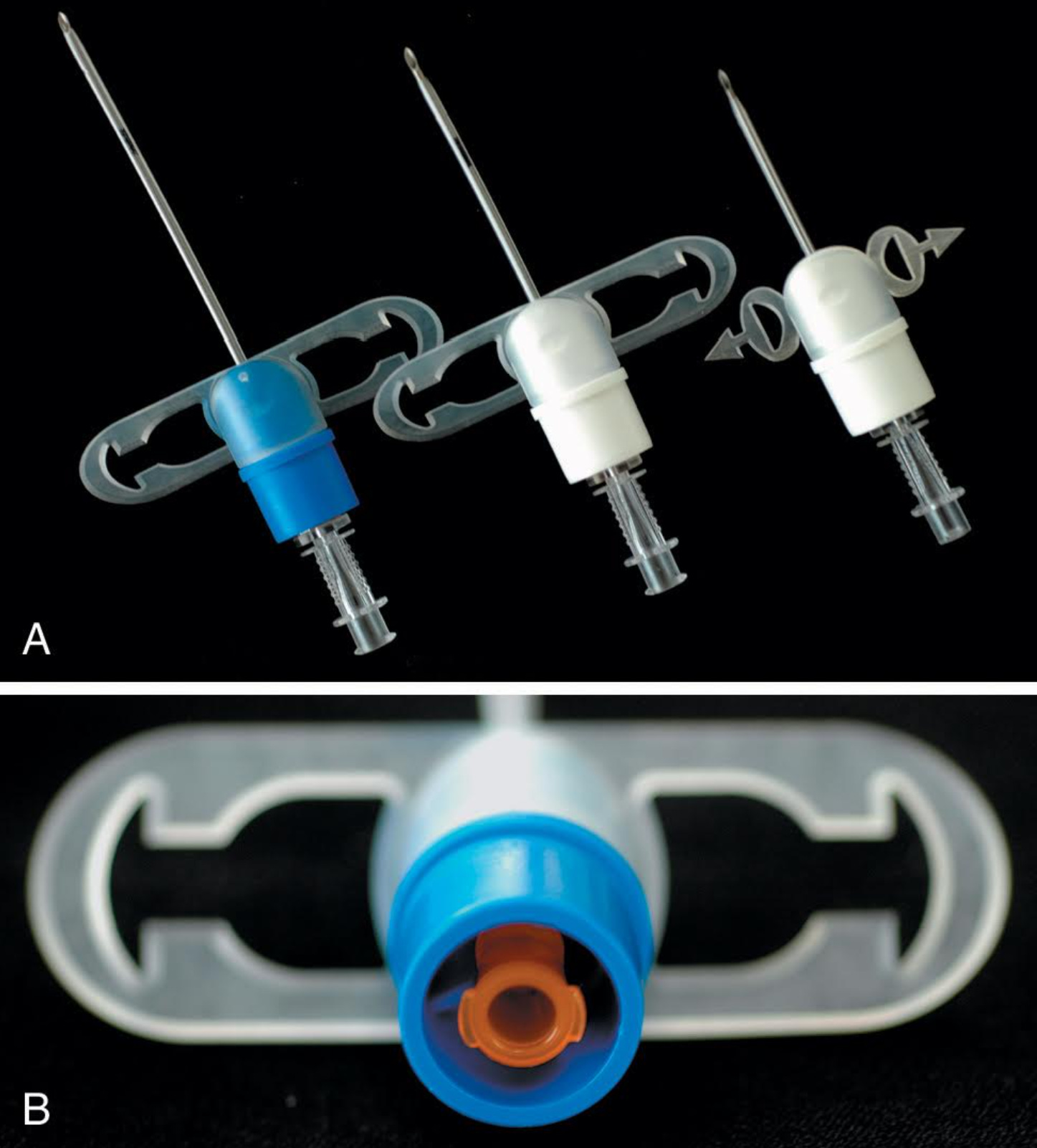
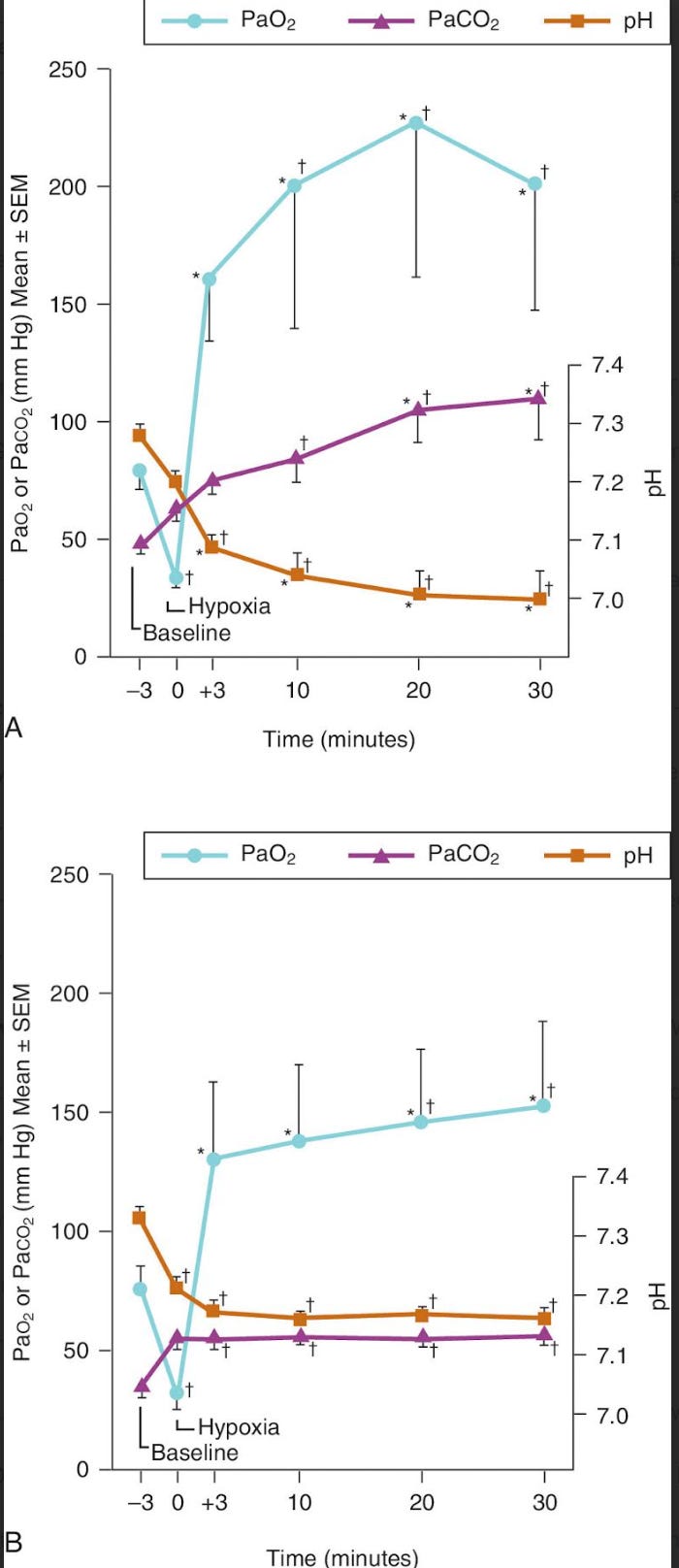
I had a similar experience as Myron’s way back in 1972 when as a pediatric intern in the ER a 3 year old came in with acute epiglottitis, severely cyanotic, and we were unable to intubate him. A surgical resident attempted a cricothyrotomy in this moving target and lacerated the carotid; he bled to death! This vision is still burned in my mind. Years later as a relatively young attending at the Massachusetts General Hospital my colleagues David Todres who was head of the PICU and our ENT colleague Ron Eavey were discussing the need for data in the efficacy of needle cricothyrotomy. Our experience clearly indicated that children can tolerate enormous increases in carbon dioxide (in several cases 155-269 mmHg) 1 but do not tolerate hypoxemia. Our reasoning was that most anesthesiologists are great with needles but terrible with scalpels. We decided that a study in brain dead children, often with arterial access already established, would be a perfect model. We submitted a protocol to the IRB and they rejected it stating that since the subjects were already dead that this was not the purview of the IRB and that we should contact the hospital lawyers. So, we contacted the lawyers, and they said no, this is an IRB issue!! So, our study went by the wayside until we decided to look at an animal model (anesthetized ~20 kg mongrel dogs assigned to euthanasia). We looked at two conditions: One with total airway obstruction (the anesthetized dog’s mouths stuffed with gauze) but with spontaneous respirations and the other total airway obstruction but paralyzed. With our prior experience in children with supercarbia we reasoned that all we needed to do was to deliver oxygen and not make any attempts at ventilation. We performed a needle/IV catheter cricothyroid puncture, attached a 3 mm tracheal tube 15 mm adapter and used a self-inflating bag to deliver 1 L/min, Figure 1A illustrates that the mean PaO2 went from ~40 mmHg to >100 mmHg and remained there for 30 minutes while the PaCO2 climbed to >100mmHg. We clearly demonstrated that all that was needed was to deliver oxygen as long as there were spontaneous respirations: no need for jet ventilation, no need for positive pressure ventilation! Just deliver low flow oxygen and avoid barotrauma e.g., pneumomediastinum. We assumed that by this time a skilled surgeon would be availabhigh inflation pressures. Once again we were able to increase the PaO2 to > 100 mmHg and also maintain the PaCO2 at ~60mmHg for 30 minutes (Fig 1B). 2 In my opinion nearly every percutaneous cricothyrotomy device is not designed for use in children let alone infants or toddlers and their size is likely to cause significant trauma to the airway and/or surrounding structures. 3 The only device I have found that might be appropriate is a device developed by an engineer in Germany who developed it after his child died from airway obstruction during an episode of epiglottitis who I met at an ASA meeting where he was demonstrating his invention. This is the Jet Ventilation Catheter (VBM Medizintechnik GmbH Sulz, Germany) which is made in 3 sizes (13, 14 and 16 gage). It consists of a curved puncture needle within a Teflon catheter which has a 15 mm adapter built in as well as flanges to secure with tracheostomy tape. I suggest that these be available in every emergency airway cart. I am curious if anyone out there has used this device or if you are even aware of its existence.
References
1. Goldstein B, Shannon DC, Todres ID. Supercarbia in children: clinical course and outcome. Crit Care Med 1990;18(2):166–8. DOI: 10.1097/00003246-199002000-00008.
2. CJ C, RD E, ID T, DE J. Crocothyroid membrane puncture: oxygenation and ventilation in a dog model using an intravenous catheter. Crit Care Med 1988;16:615–619.
3. Cote CJ, Hartnick CJ. Pediatric transtracheal and cricothyrotomy airway devices for emergency use: which are appropriate for infants and children? Paediatr Anaesth 2009;19 Suppl 1:66–76. DOI: 10.1111/j.1460-9592.2009.02996.x.le and a true surgical airway could be established. In the second part of the study we paralyzed the dogs and disabled the self-inflating bag pop off to enable very
From Francis Veyckemans
Tumor Lysis Syndrome (TLS) can indeed be fatal in the perioperative period.
In addition to a high level of suspicion in patients presenting with the hematologic pathologies quoted in the paper, we should look at the child’s plasma uric acid level, which is very unusual in pediatric anesthesia practice.
But, more importantly, we should refrain from administering any steroid, including the so-called “antiemetic” dose of dexamethasone. This can indeed precipitate a tumor lysis syndrome, as already published in a few publications such as:
1- Farley-Hills E, Byrne AJ, Brennan L, Sartori P. Tumour lysis syndrome during anaesthesia. Pediatr Anesth 2001; 11: 233-6.
2- Mc Donnel C, Barlow R, Campisi P, Grant R, Malkin D. Fatal peri-operative tumour lysis syndrome precipitated by dexamethasone. Anaesthesia 2008; 63: 652-5.
3- Osthaus WA, Linderkamp C, Bünte C, Jüttner B, Sümpelmann R. Tumor lysis syndrome with dexamethasone use in a child with leukemia. Pediatr Anesth 2008; 18:268-70.
4- Sinha R, Bose S, Subramaniam R. Tumor lysis under anesthesia in a child. Acta Anaesthesiol Scand 2009; 53: 131-3.
In my mind, the suspicion or diagnostic workup of a hematologic malignancy should be considered as a contraindication to steroids, including dexamethasone, unless the hematologist in charge has given a green light.
From Deborah C Richman MBChB FFA(SA), Clinical Associate Professor, Department of Anesthesiology, Stony Brook University Medical Center
Regarding Tumor Lysis Syndrome (TLS) – our peds oncology team frequently reminds us to avoid PONV prophylaxis with dexamethasone in these patients, as it can induce TLS. And indeed we have seen that happen. So ‘routine anesthesia’ is not always routine anesthesia.
Thanks Dr. Cote and Dr. Yaster for posting this incredibly important and useful information.