
Reader response
Myron Yaster MD

From Proshad Efune, M.D. MSCS, Associate Professor, Department of Anesthesiology and Pain Management, UT Southwestern Medical Center
The case for teaching direct laryngoscopy- with a direct laryngoscope
While VL has become increasingly prevalent in both elective and emergent airway management, we must not lose sight of the foundational skill of DL—particularly when training the next generation of airway experts. DL remains a critical tool in our arsenal, especially in high-acuity environments like the PICU.
If you’ve witnessed an emergency intubation in the PICU, you’ve likely seen how reliance on VL can introduce avoidable delays. The device must be located—often by a respiratory therapist already under stress—wheeled into a crowded room, plugged in because the battery is dead, and assembled correctly (a process that is often a stumbling block during crises). These precious minutes could be the difference between stabilization and deterioration.
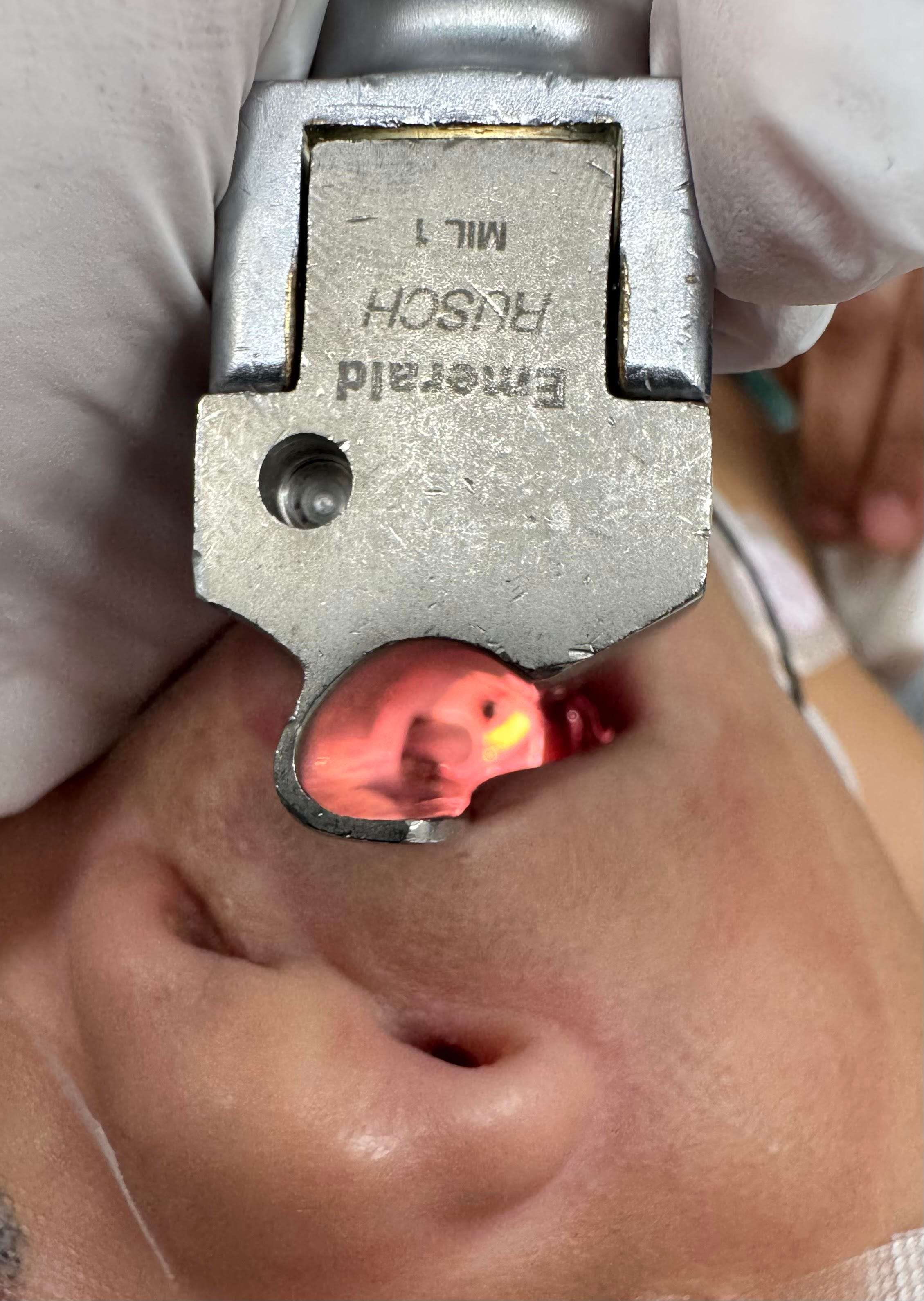
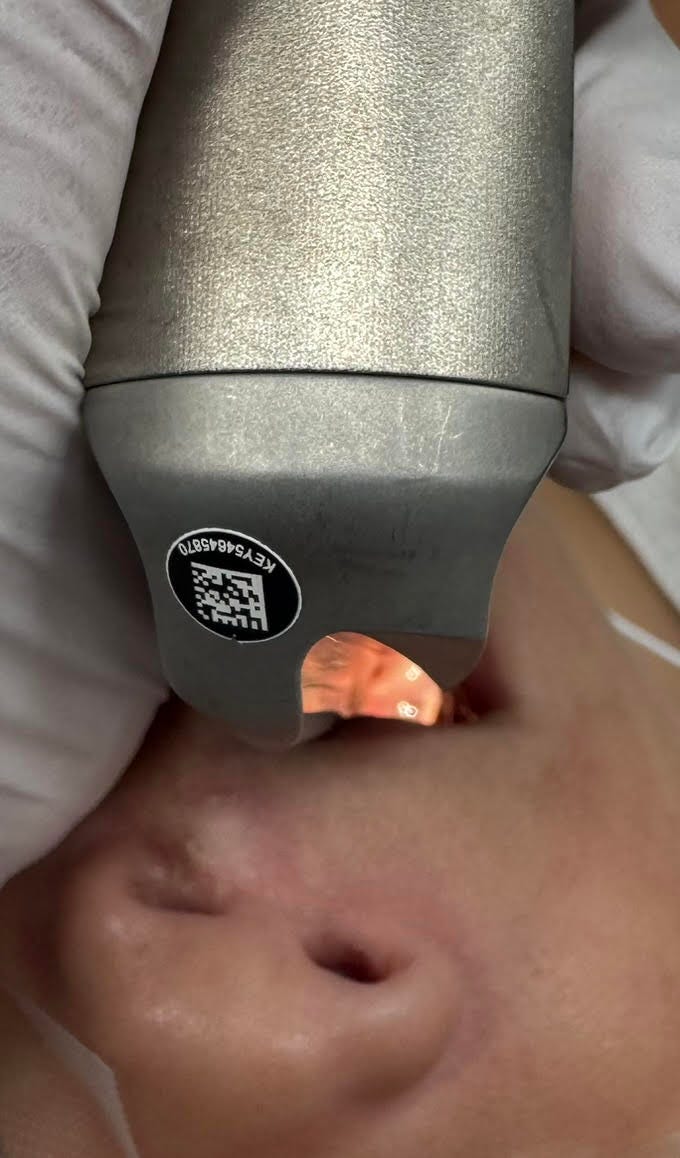
In contrast, a direct laryngoscope can be swiftly retrieved, assembled, and used without the need for extra personnel, screen positioning, or battery power. It’s reliable, fast, and effective in the right hands—which is why trainees must be taught to use it confidently. The authors of this week's PAAD argue that VL can double as a training tool for DL, allowing teachers to view the larynx on the screen while the learner uses the scope as if it were a traditional blade (video-assisted DL). But this method has limitations. As the images below demonstrate, when using the video scope for direct laryngoscopy, the view obtained is not equivalent to that of a true DL. The blade angle, bulkiness of the handle, and ergonomics differ significantly, particularly in neonates and small infants where real estate is limited.
While it is certainly possible to become proficient using a video laryngoscope to perform direct laryngoscopy, we must acknowledge that it is not the same skillset. For learners to be prepared for all clinical environments—including emergent situations—they must have hands-on training with standard direct laryngoscopy. It remains a vital component of airway management, and our educational priorities should reflect that reality.
From Anonymous on Incivility and Gender Harassment in Academic Anesthesiology - No One is Immune
I think that gender harassment can come from women or men and be in any form. In the era of transgender and LGBTQ openness, there are also victims who are not discussed as gender harassment, but have been harassed and bullied. Frankly, there is a lot of incivility in general in academic medicine that is driven by jealousy and fear. There is workplace mobbing going on which I have experienced in my career. I think that until we can recognize that we are good doctors, researchers, and scientists while helping each other, instead of tearing each other down, we will never achieve the level of academic medicine or true evidence based science that we all strive for because negative behaviors, using words to hurt others, means that there is also a modicum of negative or false intent behind the data we produce in this environRe: PAADs on gender and sexual harassment 7/29/25 and 7/30/25
From Bishr Haydar MD University of Michigan
First, I wanted to acknowledge Myron for selecting this important topic and article, and to acknowledge WELI for the excellent panel.
I wanted to add that female anesthesiologists are proven to be better clinicians than male anesthesiologists. Specifically, their patients have lower mortality.(1) This has been also shown across multiple specialties including Internal Medicine and Surgery.(2) I recall that female physicians had better adherence to protocols and "best practices" than male physicians, though I don't have that reference at my fingertips. There are multiple studies with different outcomes but consistent findings, that female physician performance is slightly superior (in the aggregate). This is now indisputable fact. So when female anesthesiologists experience "feeling that their clinical abilities were doubted because of their gender", this is even more upsetting and unjust given their superior performance (in aggregate).
And to anyone who is bothered by the reality that female physicians are generally slightly better: I'm sure you're also great at your job. This difference is only important in the aggregate and not at the individual level.
References:
1. Jerath A, Satkunasivam R, Kaneshwaran K, et al. Association between anesthesiologist sex and patients’ postoperative outcomes: A population-based cohort study. Ann Surg. 2024;279(4):569-574.
2. Heybati K, Chang A, Mohamud H, et al. The association between physician sex and patient outcomes: a systematic review and meta-analysis. BMC Health Serv Res. 2025;25(1):93.ment. Incivility, harassment, and workplace mobbing, and workplace violence exist and are pervasive and it will take all of us to move the needle in a positive direction.
From